
Libya - Ekhbary News Agency
Conflicting Reports Emerge on the Alleged Death of Saif al-Islam Gaddafi, Son of Former Libyan Dictator
Saif al-Islam Gaddafi, the prominent son of Libya's long-time ruler Colonel Muammar Gaddafi, has been reportedly killed, according to an announcement made by the head of his political team on Tuesday. The Libyan News Agency cited this confirmation regarding the death of the 53-year-old, who was once widely perceived as his father's designated heir. However, the circumstances surrounding his alleged demise are shrouded in conflicting accounts, underscoring the persistent volatility and fractured political landscape that has defined Libya since the 2011 uprising.
Initial reports, relayed by his lawyer to the AFP news agency, suggest that an assassination was carried out by a "four-man commando" unit at his residence in the western city of Zintan. The precise orchestrators behind this alleged attack remain unclear, adding another layer of mystery to the unfolding narrative. In stark contrast, a competing version of events emerged from his sister, who informed Libyan television that Saif al-Islam had met his end near the country's border with Algeria, far from Zintan. Such discrepancies are not uncommon in a nation where information is often fragmented and controlled by various factions, making definitive confirmation challenging.
Read Also
- NASA's Kennedy Space Center Infrastructure Unprepared for Super Heavy Rocket Era
- GM Installs Robots at EV Plant Amidst Layoffs, Sparking Union Outcry
- Free Streaming Trials in 2026: A Comprehensive Guide to Available Options
- How to Stream Norway vs. Senegal World Cup 2026 Match Free Online
- Prime Day 2026 Headphone Deals: Sony XM6 and AirPods Max 2 Lead Early Sales
Born in 1972, Saif al-Islam Gaddafi held a significant, albeit unofficial, influence during his father's four-decade rule, which spanned from 1969 until his overthrow and killing in 2011. He was long considered the most powerful and feared figure in Libya after Muammar Gaddafi himself. From the early 2000s, he played a pivotal role in engineering Libya's diplomatic rapprochement with Western nations, a period that saw the lifting of international sanctions imposed on the North African state. These efforts included high-profile negotiations that ultimately led his father to abandon Libya's controversial nuclear weapons program. During this era, some observers even viewed Saif al-Islam as a potential reformist and a more acceptable face for a modernizing Libya, despite his consistent denials of desiring to inherit power, famously stating that the reins of power were "not a farm to inherit."
His trajectory dramatically shifted with the eruption of the 2011 uprising. Accused of being a key architect in the brutal repression of anti-government protests, Saif al-Islam became a target of both international and domestic justice. The International Criminal Court (ICC) issued an arrest warrant for him, seeking to prosecute him for crimes against humanity related to his alleged role in suppressing the 2011 opposition movement. Following his father's downfall, he was captured by a rival militia in Zintan, where he was held for nearly six years, effectively removed from the national political scene.
In 2015, a court in Tripoli, then under the control of the UN-backed government, sentenced him to death in absentia for his involvement in the crackdown. However, in 2017, he was controversially released by a militia in Tobruk, in the eastern part of the country, under the provisions of a general amnesty law. His release sparked outrage among human rights advocates and victims' families, further highlighting the deep divisions within Libya's legal and political systems.
Since the collapse of the Gaddafi regime, Libya has been plunged into a protracted state of civil conflict and political fragmentation. The country remains largely split into areas controlled by an array of armed militias and is currently governed by two rival administrations, one based in Tripoli and another in the east. This persistent instability has created a complex environment where accountability is often elusive, and the rule of law is inconsistently applied.
Related News
- KHL: Torpedo Secures Overtime Victory Against Admiral, Key Matchups Ahead
- Kozlovsky on Suspension: 'Four Years of Our Best Career Shamelessly Stolen, and Everyone Applauded'
- L'Equipe Reports Gaëtan Perrin Set for Auxerre Return on Loan from FC Krasnodar
- Evgeni Plushenko to Closely Monitor Ilia Malinin at 2026 Olympics, Anticipating Quintuple Jump Revolution
- Italian Biathlete Rebecca Passler Fails Doping Test Ahead of Milan-Cortina 2026 Olympics
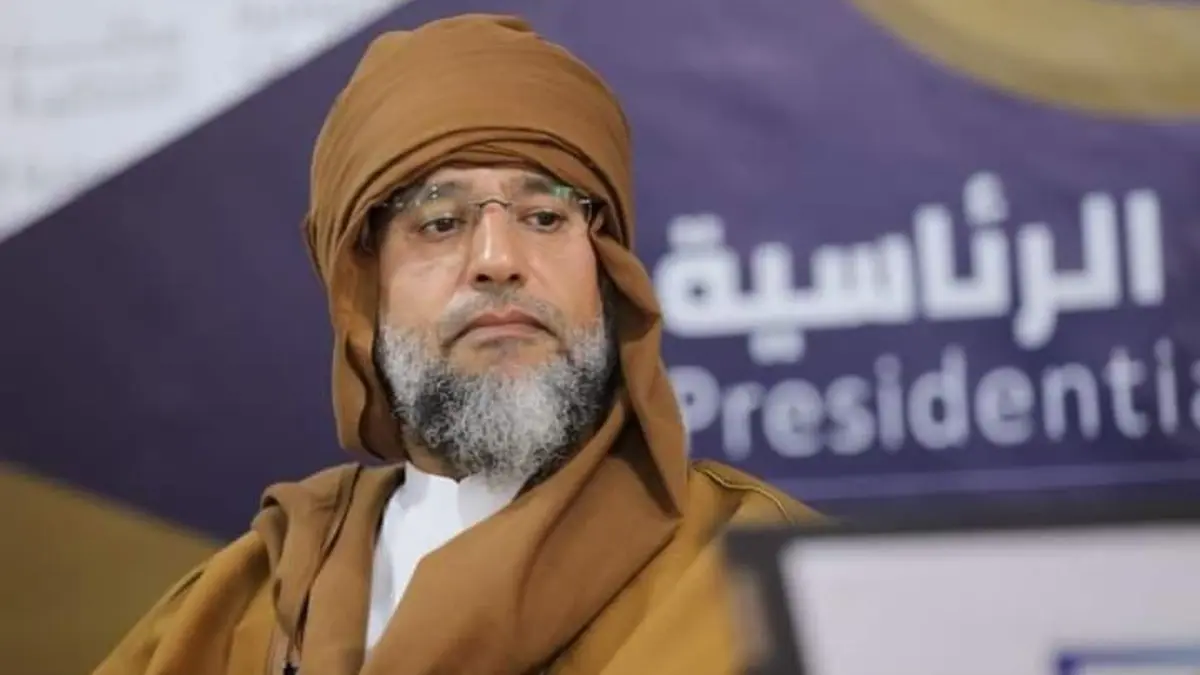
Despite his turbulent past and international warrants, Saif al-Islam Gaddafi re-emerged on the political stage in 2021, announcing his intention to run for the presidency in elections that were subsequently postponed indefinitely. His potential candidacy had already ignited significant debate and controversy, with many questioning the legitimacy and implications of his return to public life. The latest reports of his death, if verified, would undoubtedly send ripples through Libya's intricate political landscape, potentially altering power dynamics and future electoral prospects, while simultaneously closing a complex chapter in the nation's post-revolution saga.
