
Gaza - Ekhbary News Agency
Rhythm of Hope: Palestinian Drummer Transforms Waste into Music for Displaced Children in Gaza
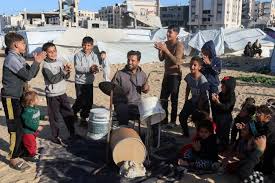
Amidst the desolate landscape of displacement tents in Khan Yunis, southern Gaza Strip, a melody of resilience and hope emerges, orchestrated by Palestinian drummer Qassem. At 24 years old, Qassem, whose name has become a symbol of ingenuity and compassion, reinvents musical art, transforming common objects – old buckets, rusty bicycle parts, and even a tea tray – into vibrant instruments. His improvised drum kit is not just a percussion set; it is a beacon of light and joy for hundreds of children and families living under the constant shadow of scarcity and the trauma of war.
Qassem's initiative transcends mere musical performance. It is an act of cultural resistance and a psychological balm in an environment where normalcy has been obliterated. The displacement camps in Khan Yunis are a microcosm of the deep scars left by the conflict. Daily life is an incessant struggle for survival, beginning with the exhaustive search for potable water, followed by long queues at communal kitchens, and the constant anxiety of securing food for loved ones. In this scenario of deprivation, Qassem's music emerges as a vital breath, a momentary relief from the psychological pressure afflicting everyone, especially young and vulnerable minds.
Read Also
- US-Iran Deal to Reopen Hormuz Strait: Oil Prices to Stabilize?
- Reported US-Iran Peace Deal Sparks Mixed Reactions
- El Nino Threatens Southeast Asian Livelihoods Amid Soaring Inflation
- Ibrahim Maza: Algeria's World Cup Star with German-Vietnamese Roots
- UN Urges Drone Regulation in Conflict Zones Amid War Crime Concerns
For Qassem, drumming is more than a passion; it is a catharsis. He shares that playing is an essential way to release the immense emotional burden and accumulated stress from life in the camps. This energy is transmitted to the children, who respond with contagious enthusiasm. They clap, dance with abandon, and sing along, absorbing every note as a precious gift. What Qassem offers is something almost extinct in that devastated territory: pure entertainment and the chance to be a child again, even if for a few moments.
The impact of his performances is deeply felt by the camp residents. Bushra al-Shafihi, a Palestinian also displaced by the war, testifies to the transformative power of music. She observes that these moments of play and joy are crucial for children, who have been stripped of their routines, toys, and games. "Without the usual toys, without balloons or games, the sound of these improvised drums becomes a simple, yet powerful, form of shared joy," says Bushra, underscoring the initiative's importance for the emotional well-being of the young.
Qassem's story is also a testament to loss and reconstruction. His original instruments, the fruit of years of dedication and passion, were tragically destroyed in Israeli attacks during the conflict against the Hamas terrorist group. However, adversity did not break his spirit. With the ceasefire currently in effect, Qassem embraces the challenge of "making something out of nothing," resuming his musical talent and recreating sounds with the inventiveness that the situation demands. This adaptability and refusal to succumb to despair are remarkable.
Related News
- Baya, The Child Prodigy of Algerian Painting: A Dazzling Retrospective at the Grand Mosque of Paris
- Family Saga: Forbidden Love Between Tyrol and Buenos Aires
- Germany and the World: From Domestic Political Controversies to Global Challenges
- Dresden Commemorates Destruction – Thousands Protest Far-Right Exploitation
- European Nuclear Powers: Macron's Vision for Enhanced Deterrence Meets German Reservations
Every time Qassem sits behind his homemade drum kit, the Khan Yunis camp transforms. The rhythmic sound fills the air, and the children's faces light up with smiles, however fleeting. These brief musical interludes offer a vital pause from harsh reality, cultivating a sense of community and hope. Art, even in the most extreme circumstances, proves to be an indispensable tool for healing, resilience, and the affirmation of life amidst destruction. Qassem's music is not just noise; it is the heartbeat of a community that refuses to be silenced.


