
Middle East - Ekhbary News Agency
Strait of Hormuz: Iran's Strategic Leverage Over Global Oil Chokepoint
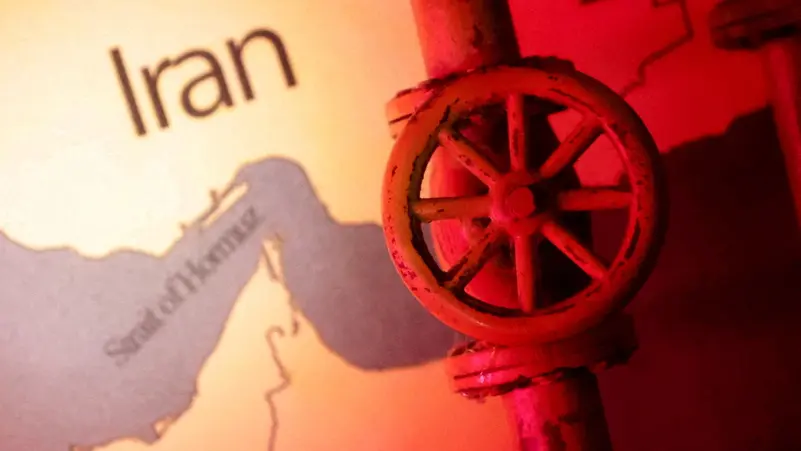
Amidst the escalating crisis surrounding the Strait of Hormuz, global attention is once again fixated on this vital maritime artery, which serves as the most critical bottleneck for global oil trade. What is unfolding is not merely a transient regional confrontation, but a profound illustration of how strategic energy chokepoints are wielded as primary instruments to shape global power and influence the geopolitical landscape. Iran's strategy hinges significantly on exploiting its unique geographical position to assert control over this passage, a tactic that has repeatedly proven effective throughout modern history.
Control over such crucial maritime passages, through which immense volumes of crude oil and liquefied natural gas (LNG) flow, has long been a decisive factor in defining the balance of international influence. The Strait of Hormuz connects the Arabian Gulf to the Arabian Sea and the Indian Ocean, facilitating the transit of roughly one-fifth of the world's oil supplies and a substantial portion of its LNG. Any disruption within this strait has the potential to trigger sharp spikes in global energy prices, threatening the economic stability of energy-importing nations worldwide.
Read Also
- Three Dead, Including Officer and Civilian, in Montreal Shooting
- Qatar Gas Plant Explosion Kills 13, Injures 66
- Thousands Flee as Putin Intensifies Bombardment on Coveted Donbas Cities
- Cuba's Fuel Crisis Forces Early End to School Year
- US Eases Iran Oil Sanctions Amid Tehran's Denial of New Nuclear Commitments
The global response to the current crisis vividly illuminates how the lessons gleaned from past energy crises continue to inform contemporary policy. The coordinated release of strategic oil reserves by the International Energy Agency (IEA) reflects mechanisms meticulously developed following the 1973 oil crisis. These measures were designed to stabilize markets and preempt panic buying, providing temporary supply buffers to calm market anxieties and demonstrate a deep recognition of the inherent fragility within the global energy supply chain.
However, this response also starkly exposes deeper, more pressing structural vulnerabilities. While strategic oil reserves offer a degree of flexibility, there is a notable deficit in sufficient global refining capacity to process additional crude oil rapidly and efficiently. More critically, the absence of strategic reserves for natural gas leaves gas-dependent nations significantly more exposed to risks in the event of supply disruptions, highlighting a critical gap in global energy security strategies. This vulnerability is particularly acute given the increasing reliance on natural gas for power generation and industrial processes across many economies.
Therefore, this crisis underscores two overlapping and undeniable realities. Firstly, the physical infrastructure of energy transport – pipelines, refineries, and maritime chokepoints – remains absolutely central to global geopolitical competition. Control over these assets, or the capacity to disrupt them, grants actors immense leverage on the international stage. Secondly, the repercussions of disruptions in these systems extend far beyond the immediate conflict zone, reshaping alliances, impacting financial markets, and altering the broader geopolitical landscape. The ripple effects can be felt across continents, influencing everything from trade agreements to diplomatic relations.
Related News
- Apple Unveils 16-inch MacBook Pro with M5 Max Chip: Performance Boost Meets Familiar Design
- Apple Unveils 16-Inch MacBook Pro with M5 Max: Performance Boost, Unchanged Design
- Apple Unveils 16-Inch MacBook Pro with M5 Max: Performance Boost, Unchanged Design
- Apple Unveils MacBook Neo: An Affordable Gateway to macOS for Everyday Users
- MacBook Neo: Apple Enters the Entry-Level Laptop Market with an iPhone Chip and Competitive Price
The broader geopolitical stakes extend well beyond the immediate confines of the Middle East region. The outcome of this escalating conflict is poised to influence global alliances, potentially shaking up existing partnerships and forging new ones. It will undoubtedly alter Russia's strategic posture, particularly concerning its own energy exports and regional influence. Perceptions of American power and its commitment to global stability will also be scrutinized and potentially reshaped. Furthermore, the crisis will play a crucial role in determining the future architecture of the global energy supply, accelerating shifts towards diversification or reinforcing existing dependencies. In this sense, the struggle over the Strait of Hormuz is not merely confined to the global oil market; it is fundamentally about the ever-evolving structure of global power in the 21st century, where energy remains a critical instrument in the grand geopolitical chessboard.


