Germany - Ekhbary News Agency
Baden-Württemberg: Green Triumph and the CDU's Miscalculated Strategies
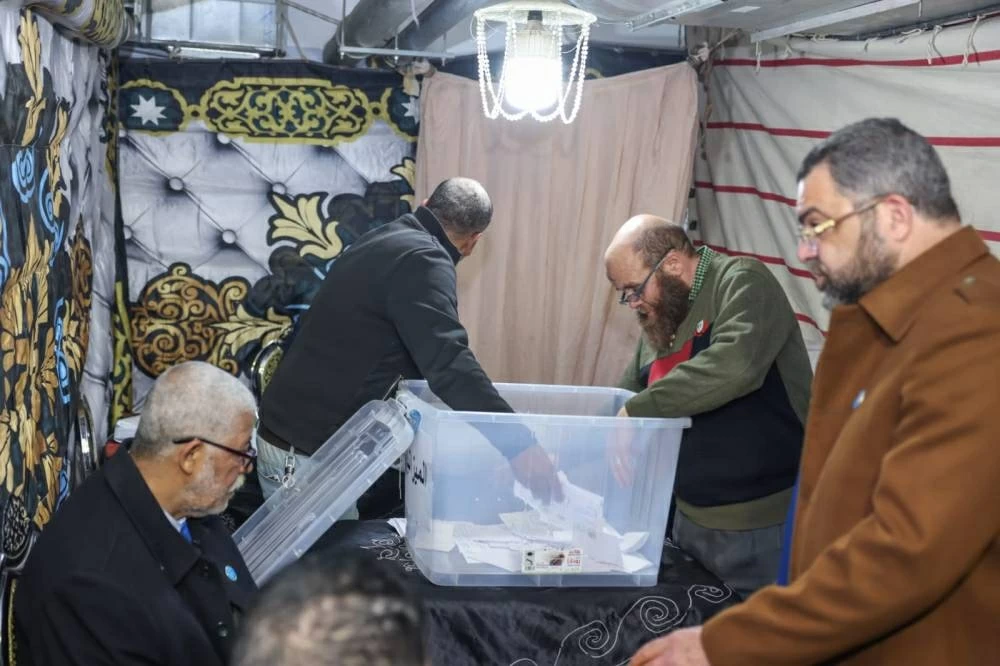
The state election in Baden-Württemberg has triggered a political earthquake, reorganizing the balance of power in southwestern Germany and attracting nationwide attention. What was long considered a certain victory for the Christian Democrats culminated in a triumphant success for the Greens, who narrowly but decisively pushed the CDU into second place. Election night in the Stuttgart state parliament revealed a spectrum of emotions, ranging from serious statesmanship to undisguised disappointment, reflecting the profound shifts in voter behavior.
As the leading candidates stepped forward for the press conference around 8:30 PM on Sunday evening, the exit polls spoke a clear language. Green candidate Cem Özdemir presented himself with a serious, almost statesmanlike demeanor, while Manuel Hagel of the CDU looked visibly tense into the plenum crowded with journalists and photographers. Markus Frohnmaier of the AfD, however, could barely hide his broad grin, an expression of his party's success, which secured a strong position with around 18 percent. The faces of the candidates from the SPD, FDP, and Left – Andreas Stoch, Hans-Ulrich Rülke, and Amelie Vollmer – bore witness to deep disillusionment, their expressions frozen.
Read Also
- NASA's Kennedy Space Center Infrastructure Unprepared for Super Heavy Rocket Era
- GM Installs Robots at EV Plant Amidst Layoffs, Sparking Union Outcry
- Free Streaming Trials in 2026: A Comprehensive Guide to Available Options
- How to Stream Norway vs. Senegal World Cup 2026 Match Free Online
- Prime Day 2026 Headphone Deals: Sony XM6 and AirPods Max 2 Lead Early Sales
At that point, the Greens were narrowly ahead of the CDU in all forecasts and exit polls, with both parties achieving around 30 percent of the votes. The result was particularly bitter for the SPD and FDP: the SPD performed significantly worse than expected with about 5.5 percent, while the FDP and the Left both fell below the five-percent threshold and failed to re-enter the state parliament. This meant the FDP became an extra-parliamentary force in Baden-Württemberg for the first time, leading to the resignation of its long-serving parliamentary group leader and state chairman, Hans-Ulrich Rülke, on election night. Andreas Stoch, the SPD's lead candidate, also announced his withdrawal from the parliamentary group and state leadership to make way for a new beginning. Both politicians attributed their poor performance largely to the "personalization" of the election campaign.
Cem Özdemir, positioning himself as the likely election winner, used his first statement to praise the success as a "brilliant comeback" and a confirmation of the Greens' course over the past ten years, during which Winfried Kretschmann had already led the state as Minister-President. His signal was unequivocal: he aims to continue cooperation with the Christian Democrats, entirely in line with his campaign promises. He emphasized the need to open a "book on equal terms" and seek solutions in the "middle," appealing to both his party and the left wing to prioritize the state's interest over party interests. Leading Green politicians, such as parliamentary group leader Andreas Schwarz, reaffirmed this stance, speaking of an alliance of almost equally strong partners.
Manuel Hagel of the CDU, however, had to concede defeat, even though his party managed to improve its result by more than five percentage points compared to the last state election. "We won, but not what we wanted," Hagel summarized, taking responsibility for the missed goal of leading the government again. However, he refused to specify the exact consequences. He saw the mandate to govern with the Greens and Özdemir, but at the same time, he again criticized a "smear campaign" that he believed had been waged against him – an accusation that had gained weight in the days leading up to the election.
The CDU had built its campaign since mid-last year on a series of assumptions that proved deceptive. It relied on its traditional strength as the supposed "state party," a claim it had never abandoned despite 15 years without a Minister-President. The Greens, on the other hand, put everything on the popularity of their lead candidate Özdemir, without foregrounding a clearly recognizable core Green issue. The campaign proceeded uneventfully for a long time and without major controversies over the actual state political issues such as internal security, school policy, or science policy. The CDU led in opinion polls for a long time, which was probably more a reflection of the general political mood than a concrete preference for its state policy, as state political debates often stand in the shadow of federal and world politics.
Related News
- France: Man Suspected of Plotting Louvre Attack, Seeking to Join ISIS
- Ukraine: Ex-Zelensky Aide Implicated in Multi-Million Dollar Money Laundering Scheme
- Over 17 Tons of Unidentified Detergents Seized in Cairo Unlicensed Factory
- Thailand Grants Early Release to Former Prime Minister Thaksin Shinawatra
- Egypt Expects Continued Heatwave, Slight Temperature Rise on Monday
Only in the last few weeks before the election did the campaign suddenly pick up speed, as a close head-to-head race emerged between the 37-year-old Hagel and the 60-year-old Özdemir. A crucial turning point was the publication of an eight-year-old video by Karlsruhe Green Bundestag MP Zoe Mayer. In the clip, Hagel, then 29 years old and a state parliament member and state general secretary, spoke effusively about a schoolgirl's "brown hair" and "doe eyes" during a school visit. This video caused a stir and led to sharp criticism of Hagel. The CDU reacted indignantly, condemning the publication as a "smear campaign," with state general secretary Tobias Vogt accusing the Greens of having "lost their moral compass." This late escalation of the campaign, which focused heavily on personal attacks, overshadowed substantive political debates and may have contributed significantly to the close outcome by putting the CDU on the defensive and potentially mobilizing voters who rejected such polarization or were influenced by the allegations. The CDU's false assumptions of being able to rely on traditional strength and a quiet campaign were shattered by the dynamics of the final weeks and the personalization of the conflict.